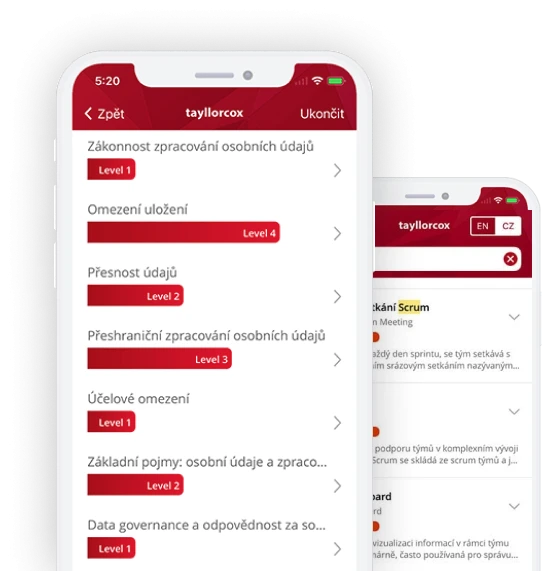
GDPR Implementation

Naviga la conformità al GDPR con sicurezza!

Requisiti:
  • GDPR DPO certification

Per chi è pensato questo corso?

Questo corso è destinato a professionisti e organizzazioni che desiderano approfondire la loro comprensione del Regolamento Generale sulla Protezione dei Dati (GDPR) e delle sue implicazioni pratiche. Se il tuo obiettivo è garantire la conformità, gestire la protezione dei dati all'interno della tua organizzazione o semplicemente ampliare la tua conoscenza legale, questo corso offre spunti essenziali e competenze indispensabili.

Partecipando a questo corso, i partecipanti acquisiranno una comprensione completa dei requisiti del GDPR, impareranno come implementarli e comprenderanno le conseguenze della non conformità. Il corso è strutturato per aiutare le organizzazioni non solo a soddisfare gli obblighi legali, ma anche a costruire fiducia con i clienti migliorando gli standard di protezione dei dati.

Pubblico di riferimento:

  • Responsabili della Protezione dei Dati (DPO)

  • Responsabili Compliance

  • Professionisti IT e della Sicurezza

  • Responsabili delle Risorse Umane

  • Consulenti Legali che si occupano di questioni di privacy dei dati

  • Esecutivi di gestione responsabili della privacy dei dati

Cosa imparerai

Ulteriori informazioni
  • Comprendere i principi del GDPR
  • Effettuare audit sui dati
  • Implementare politiche di protezione dei dati
  • Gestire le violazioni dei dati.

Date

Valuta
Data
Luogo
Durata
Lingua
Prezzo senza IVA

Nessun risultato corrisponde ai filtri inseriti

Caricamento...

Desideri questo corso in forma individuale?

Facci sapere!

Questo corso può essere organizzato su misura - sia come formazione individuale 1:1, sia per il tuo team.
Basta lasciarci un contatto e ti contatteremo con opzioni adattate alle tue esigenze.

Inviato con successo

Ti contatteremo.

Cronologia

1st Day

09:00 – 10:30 Data flow mapping
  • The initial information audit identifies the areas covered by the GDPR.
How to map correctly
  • Form requirements
  • Output requirements
  • Consent is not always required
  • Developing an analysis of purposes and titles
10:30 – 10:45 Coffee break
10:45 – 12:15 Mapping at the level of
  • Data flows
  • Separate processes
Mapping by topic
  • Role mapping
  • IS/IT mapping
  • Process mapping
  • Consent mapping
  • Documentation mapping
12:15 – 13:15 Lunch break
13:15 – 14:45 GAP Analysis - Procedure
  • Assessment of the impact of EU Regulation 679/2016 on the organisation.
Data definition
  • Assessment of the position of the Trustee
  • Scope of necessary interventions (IT, Legal, HR...)
14:45 – 15:00 Coffee break
15:00 – 16:30 GAP Analysis - OutputsYou will learn to identify discrepancies between the requirements set out in the GPDR and the processes in your organisation.
  • Appointing a DPO
  • ICT and necessary changes
  • Law and necessary changes
  • Controlled documentation and changes
  • GDPR's impact on the organisation
16:30 – 17:00 Conclusion
  • Summary of Implementation Day I

2nd Day

09:00 – 10:30 GDPR Risk Analysis
  • Incident characteristics
  • GDPR Threats and Vulnerabilities
  • Asset identification and valuation
  • Qualitative and quantitative risk estimates
  • How to proceed with risk analysis (identification)
Reporting
  • How to compile a management report
  • List of risks by size and characteristics
  • Evaluating and reporting the results
Ways of treating risks
  • Mitigation
  • Tolerance (acceptance)
  • Avoidance and risk transfer
10:30 – 10:45 Coffee break
10:45 – 12:15 GDPR Risk Management
  • Context with the GDPR risk management system
  • The opportunities and benefits of comparing with other risks in the organisation to make the necessary decisions.
  • DPIA Data Protection Impact Assessment
Principles
  • When a risk is acceptable
  • Legal requirements for DPIA
  • Guidance from regulatory authorities
Data Protection Assessment Principles
  • DPIA Assessment
  • How to develop DPIA procedures
  • Practical risk analysis models
  • Generic threats and vulnerabilities
  • Risk derivation and assessment
12:15 – 13:15 Lunch break
13:15 – 14:45 ÚOOÚ - inspection day
  • Incidents
14:45 – 15:00 Coffee break
15:00 – 16:30 ÚOOÚ - inspection day
  • What, how and why to document
16:30 – 17:00 Conclusion
  • Summary of Implementation Day II
  • Durata del blocco 90
  • Ore di lezione 16
  • Rinfreschi
  • Esame No

You face offers like "buy this GDPR product", "order our GDPR audit", "we have software that will solve GDPR for you".

But what do you really need? It's not another bureaucratic burden...

Do you want to be prepared for the risks that actually affect you? That's what this workshop is all about.

Domande frequenti

Tutte le domande

Che cos'è il GDPR?

Il Regolamento generale sulla protezione dei dati (GDPR) è una rivoluzione nella protezione dei dati. Il nuovo Regolamento generale sulla protezione dei dati (GDPR) dell'UE cambia le regole per il trattamento dei dati personali e introduce enormi sanzioni. Fino al 4% del fatturato mondiale, o 20.000.000€.

Il GDPR 679/2016 è applicabile nel territorio dell'Unione con forza giuridica superiore a livello di trattato internazionale. In caso di conflitto con la legge 101/2000, il GDPR ha la forza giuridica superiore e quindi si applica il GDPR. Il GDPR stesso non abroga la legge, ma in un certo senso la sostituisce e la integra in caso di conflitto.